富士胶片投资约100亿日元将LTO磁带产能提升5倍,应对生成式AI带来的归档需求
Fujifilm to boost tape production 5x as AI fuels archiving demand
富士胶片周四宣布投资约100亿日元(约6300万美元),以2025财年产量为基准将磁带产能提升5倍。项目位于神奈川县小田原工厂,贯穿2026至2028财年,用于扩产最新一代 FUJIFILM LTO Ultrium10 磁带并增加人员,是该公司迄今在专用 LTO 磁带设施上最大的一笔投资。
In an announcement released Thursday, Fujifilm said it will invest roughly 10 billion yen (about $63 million) to increase its production capacity fivefold for an unlikely beneficiary of the AI era: magnetic tape.
Fujifilm attributes the surge in archiving demand to the spread of generative AI, which the company remarked is producing “exponential growth” in data needs worldwide. The 5x increase in production capacity will be measured against fiscal year 2025 production levels.
The investment in Fujifilm’s Kanagawa Factory, Odawara site will make it “the largest investment Fujifilm has made to date in dedicated LTO tape facilities.” The project will run from fiscal years 2026 through 2028 to fund manufacturing expansion and additional personnel, primarily to produce the latest-generation “FUJIFILM LTO Ultrium10” tape.
Mainstream consumers may have abandoned tape decades ago, but the enterprise world never did. Cloud giants rely on tape to back up vast troves of data. Fujifilm’s work with magnetic tape as a data storage medium dates back to the 1950s, and in 2000, the company released its first LTO Ultrium storage tape. In 2011, the company was the first to commercially produce tape with barium ferrite magnetic particles, and in 2025 it debuted the LTO Ultrium10, the first storage solution in the medium to use what the company calls “fine hybrid magnetic particles” by combining barium ferrite with strontium ferrite tech. Each generation of tape (currently Gen 10) has seen meaningful increases in both compressed and uncompressed storage limits.
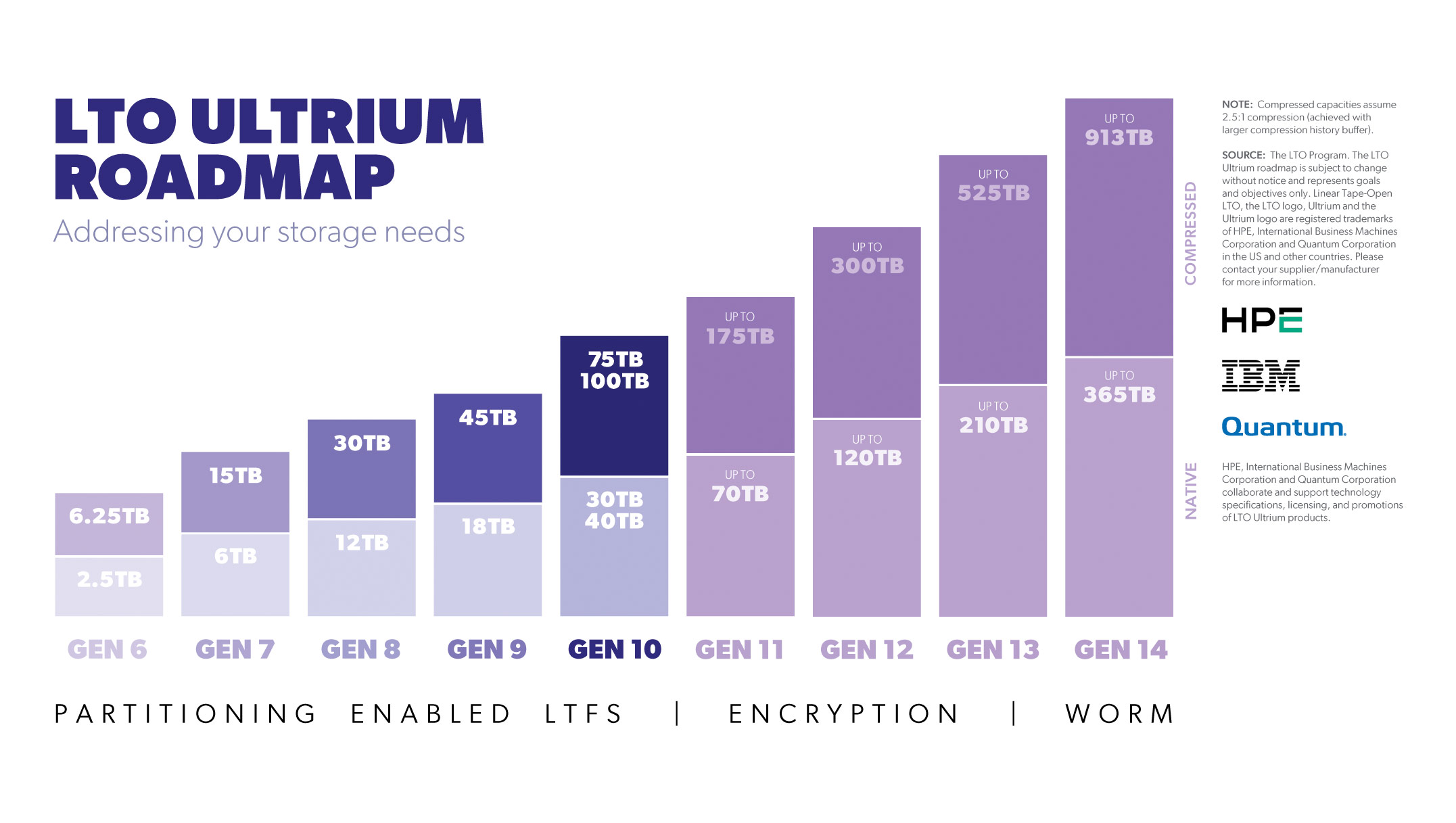
LTO capacity by generation. Gen 10 is the current tech; Gen 11-14 figures are consortium projections for the future.
LTO capacity by generation. Gen 10 is the current tech; Gen 11-14 figures are consortium projections for the future. Credit: LTO.org
According to Fujifilm, “major cloud service and data center operators” have been expanding their use of magnetic tape because it can store large data volumes at relatively low cost. Tape backups can be easily disconnected and stored in a drawer, a vault, or a separate facility. Fujifilm highlights the ability to air-gap tape cartridges as a last defense for user data: “Given the sophistication of cyberattacks, magnetic tape is attracting increasing attention as a means of protecting data from threats such as ransomware.”
来源: Ars Technica · AI · arstechnica.com