Claude’s new rules against game cloning won’t stop the AI copying boom
Claude’s new rules against game cloning won’t stop the AI copying boom
Around October 27, Anthropic added rules to Claude Code’s prompts (json file named tengu_heron_brook) banning the recreation of specific existing games, while allowing original games, genre games and works using users’ own assets; engineer Addy Osmani confirmed the move was because using Claude to infringe IP violates the usage policy.
Monkey see, monkey do
The tsunami of imitators is way bigger than any one model maker can stem.
No, see, my AI-powered creation is different because of the rainbow colors... Credit: Getty Images
Last week, Anthropic introduced a new system prompt designed to stop its Claude models from re-creating specific, existing video games. While that move could help shield Anthropic from some liability, it’s unlikely to slow much of the massive wave of AI-assisted game porting and copying that has emerged in recent months.
A social media user and AI decompilation enthusiast going by the name “chasm” was among the first to note the prompt change late last week, saying a new rule seemed to be added to the Claude Code prompt on or around October 27. That rule—included in a json file under the name “tengu_heron_brook”—reads as follows:
Do build original games, games in a genre, and games from the user’s own designs and assets. Don’t build a recreation of a specific existing game, even if it is renamed or called original.
XDA later independently verified that the new rule appears in version 2.1.314 of the Claude Code binary, which was released on October 30. XDA also reported that the “tengu_heron_brook” rule had been used for other purposes in earlier versions and that the Claude Opus 5.5 model specifically seemed to have its own distinct and independent instructions restricting game recreations as part of its system prompt bundle.
Following chasm’s initial report, Anthropic software engineer Addy Osmani confirmed on social media that the company had “added two sentences to Claude Code’s prompt on Opus 5.5 to steer it away from recreating someone else’s specific game because using Claude to infringe IP is against our usage policy.”
He added that the new prompt was designed to still allow “original games, genre games, and games built from your own designs and assets,” even as a handful of issue reports on Anthropic’s GitHub suggest the new prompt is getting in the way of some game development use cases.
We added two sentences to Claude Code’s prompt on Opus 5.5 to steer it away from recreating someone else’s specific game because using Claude to infringe IP is against our usage policy.
Original games, genre games, and games built from your own designs and assets are meant to keep working.
We’ll continue to iterate to ensure we’re striking the right balance. In the meantime, if Claude turns down something that’s yours, send it my way.
— Addy Osmani (@addyosmani) October 30, 2026
A massive wave
Anthropic’s new prompt comes as AI coding tools are powering a deluge of game projects based on existing work in one way or another. That includes thrown-together copies of game demos that are making some developers afraid to show their early work publicly, as well as thousands of AI-powered decompilation and porting projects for retro games. Thanks to AI tools, what used to be a time-consuming process requiring painstaking human effort is now orders of magnitude more efficient (though some veteran coders complain that these vibe-coded ports and decomp projects fail to clear the same quality bar as human-centered efforts).
The trend has gotten so bad that decomp.dev—a years-old community devoted to the “brutally difficult, time-consuming task” of game decompilation—announced it was shutting down last month. Community maintainer Luke Street wrote that quickly improving AI tools had made it clear that “community aspect of decompilation has been broken” as newcomers “rac[e] to port games, especially utilizing decompilations that they did not contribute to.”
“Decomp.dev was originally designed to gamify decompilation: watching the progress go up was a fun way to stay motivated when every fraction of a percent took real human effort,” Street wrote. “Today, that same idea has warped decompilation into a hollow numbers game, exacerbated by folks who just want to burn tokens to make number go up or ‘port game to PC,’ all else be damned.
Like trying to stop the tides
While Anthropic’s new prompt can be seen as a noble effort to push back against the flood of AI-powered, vibe-coded copying, it seems unlikely to have much impact overall. That’s primarily because eager game copiers can simply shift to any of the other frontier models that haven’t introduced such restrictions. And even if the AI industry as a whole began to bar this kind of use case, coders could switch to cheaper open-weight models that aren’t subject to these kinds of restrictions and are not all that far behind in capabilities.
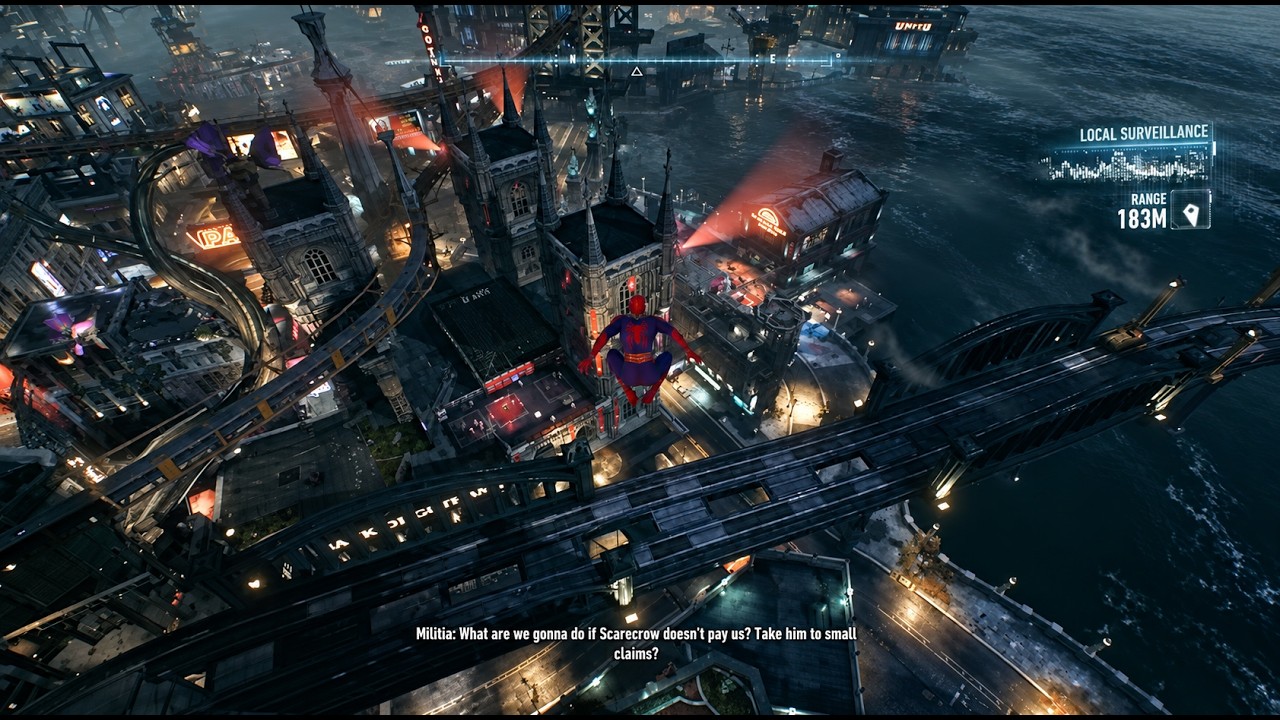
A fully playable web-slinging Spider-Man looks out over Arkham Knight‘s Gotham City, thanks to AI coding tools.
A fully playable web-slinging Spider-Man looks out over Arkham Knight‘s Gotham City, thanks to AI coding tools. Credit: YouTube
The prompt may have a more immediate benefit for Anthropic, helping protect the company from potential liability for copyright infringement in these projects. We’ve seen how AI companies face legal headaches if their models generate images based on copyrighted works, for instance. As Osmani noted in confirming the new anti-game copying prompt, “Using Claude to infringe IP is against our usage policy”—a policy that’s surely in place to protect the company legally.
Decompilation efforts based on reverse engineering code generally pass legal muster as long as “expressive elements” like art and sound assets are not included in the project. But there’s no guarantee that individual vibe-coders using Claude would be so careful with their efforts, even with Anthropic guardrails against IP theft in place.
Streamer Asmongold shares a bunch of AI-powered game mashups and decompilations.
On the other hand, there’s a risk that Anthropic’s efforts could prove too restrictive, limiting transformative game projects that build off existing work. Take, for instance, the increasingly popular trend of using AI to merge two different game concepts into one, adding Mario to Elden Ring or Spider-Man to Batman: Arkham Knight, for instance. Are these the kinds of “recreations of a specific existing game” that Claude’s new prompt should block? Or are they transformative works that are legally and creatively distinct from what inspired them? And how does the use of copyright-protected characters and images factor in?
Beyond mashups, how should a model like Claude ensure there’s a difference between a direct re-creation of Tetris (ostensibly disallowed by the new prompt) and a mere game in the Tetris genre (ostensibly allowed by the prompt)?
These are issues that even courts can have trouble adjudicating in the best circumstances. Asking an AI model to reliably draw the line between acceptable and unacceptable game clones is a tall order, even with a new two-sentence prompt in place.

Kyle Orland has been the Senior Gaming Editor at Ars Technica since 2012, writing primarily about the business, tech, and culture behind video games. He has journalism and computer science degrees from University of Maryland. He once wrote a whole book about Minesweeper.

Source: Ars Technica · AI · arstechnica.com